mirror of
https://github.com/apache/zeppelin
synced 2026-05-24 09:38:26 +00:00
 1c23f21388
### What is this PR for?
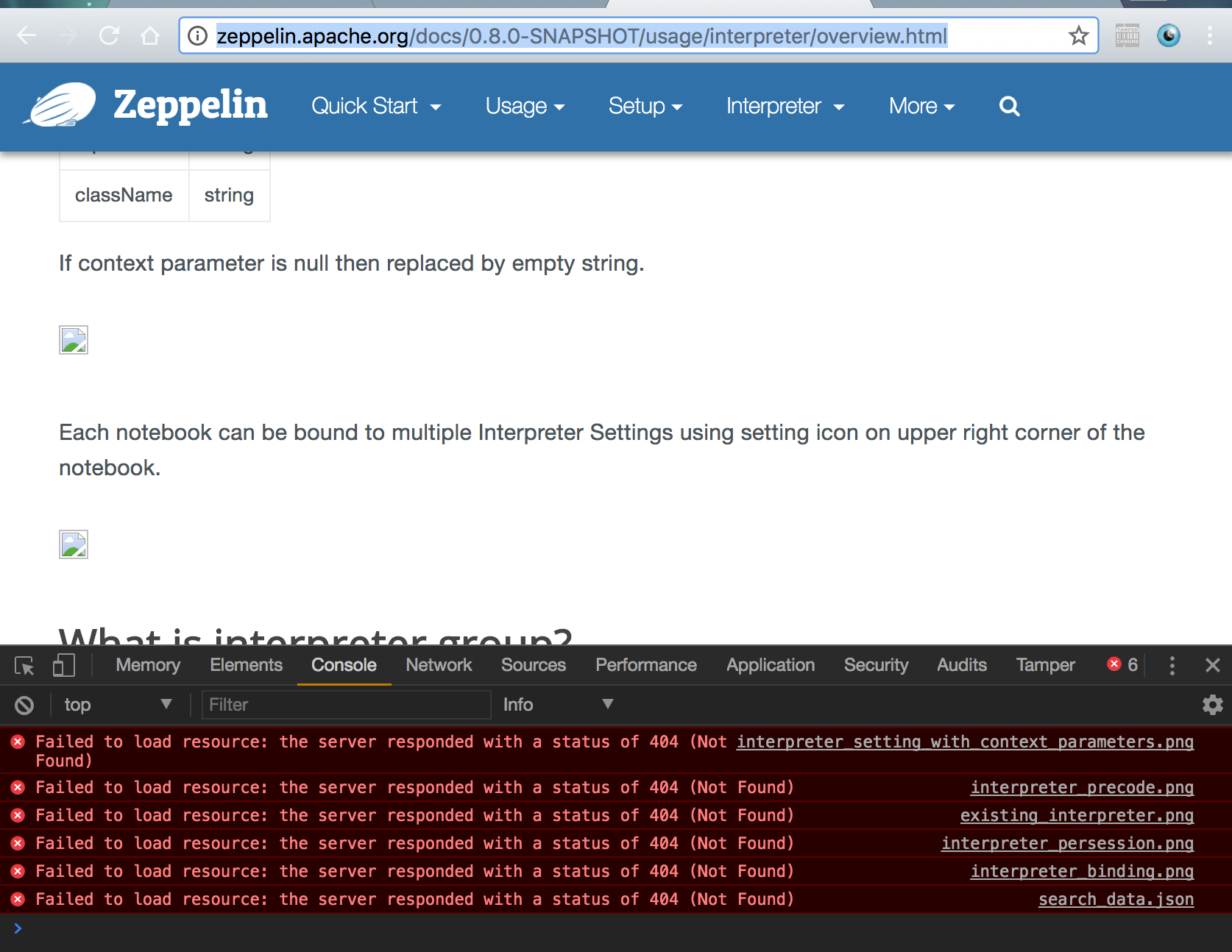
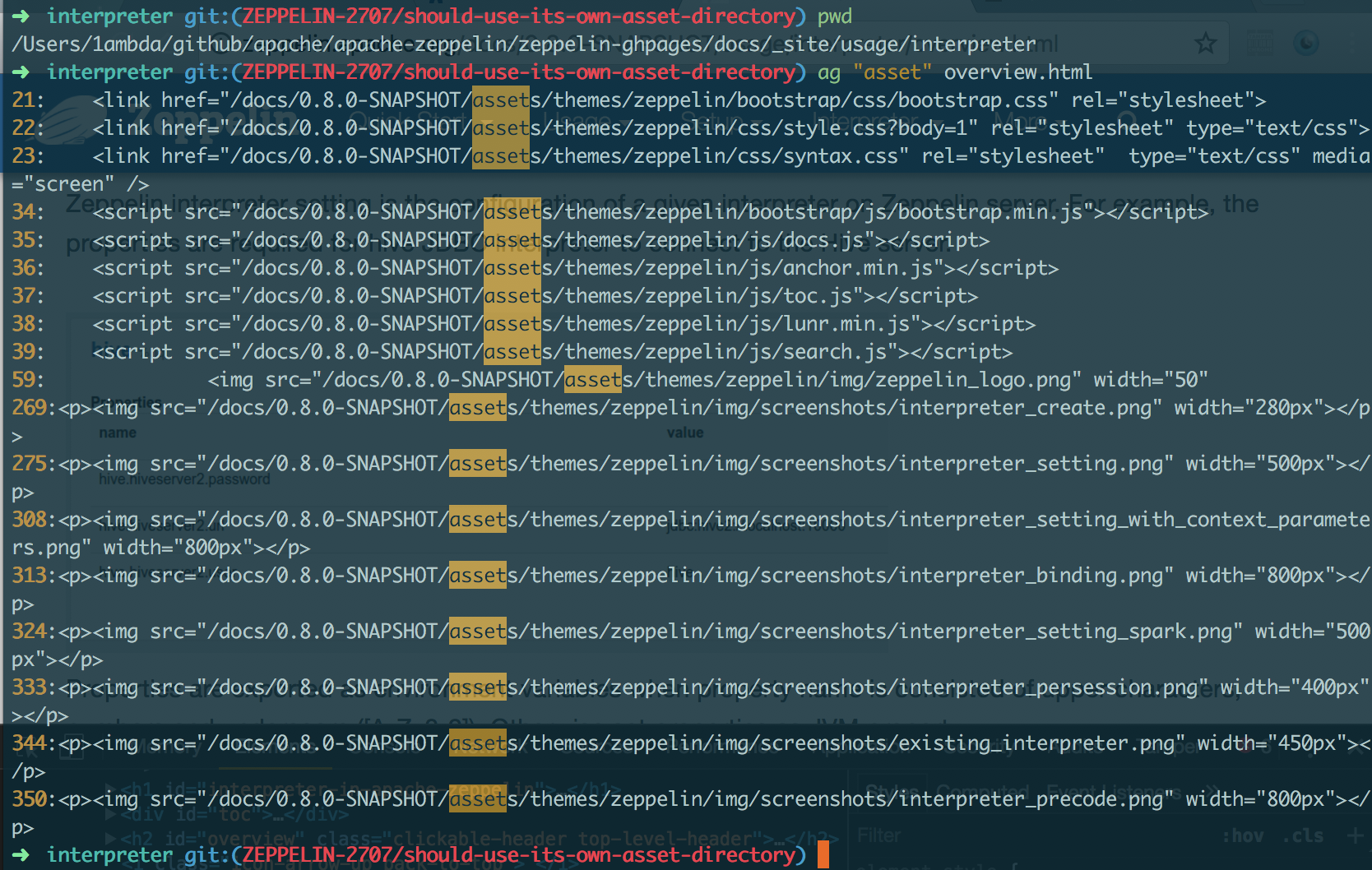
fix: broken image URLs in 0.8.0-SNAPSHOT doc
using the path `/asset` (the absolute path) for image URLs is actually invalid. That's because each version has its own image directory. So they should use the relative path. `{{BASE_PATH}}`
```
➜ asf-zeppelin tree site | grep asset
├── assets # root asset, we shouldn't use it in versioned doc.
│ │ ├── assets
│ │ ├── assets
│ │ ├── assets
│ │ ├── assets
│ │ ├── assets
│ │ ├── assets
│ │ ├── assets
│ │ ├── assets
│ │ ├── assets
│ ├── assets
```
### What type of PR is it?
[Bug Fix]
### Todos
DONE
### What is the Jira issue?
[ZEPPELIN-2707](https://issues.apache.org/jira/browse/ZEPPELIN-2707)
### How should this be tested?
1. cd `docs/`
2. build: `bundle exec jekyll build --safe`
3. check whether links in `_site` include `/docs/0.8.0-SNAPSHOT` as prefix or not
### Screenshots (if appropriate)
#### Current
http://zeppelin.apache.org/docs/0.8.0-SNAPSHOT/usage/interpreter/overview.html
#### After
### Questions:
* Does the licenses files need update? - NO
* Is there breaking changes for older versions? - NO
* Does this needs documentation? - NO
Author: 1ambda <1amb4a@gmail.com>
Closes #2450 from 1ambda/ZEPPELIN-2707/should-use-its-own-asset-directory and squashes the following commits:
fb70214a [1ambda] fix: Use its own asset dir


125 lines
5.9 KiB
Markdown
125 lines
5.9 KiB
Markdown
---
|
|
layout: page
|
|
title: "Dynamic Interpreter Loading using REST API"
|
|
description: "Apache Zeppelin provides pluggable interpreter architecture which results in a wide and variety of the supported backend system. In this page, we will introduce dynamic interpreter loading using REST API."
|
|
group: usage/interpreter
|
|
---
|
|
<!--
|
|
Licensed under the Apache License, Version 2.0 (the "License");
|
|
you may not use this file except in compliance with the License.
|
|
You may obtain a copy of the License at
|
|
|
|
http://www.apache.org/licenses/LICENSE-2.0
|
|
|
|
Unless required by applicable law or agreed to in writing, software
|
|
distributed under the License is distributed on an "AS IS" BASIS,
|
|
WITHOUT WARRANTIES OR CONDITIONS OF ANY KIND, either express or implied.
|
|
See the License for the specific language governing permissions and
|
|
limitations under the License.
|
|
-->
|
|
{% include JB/setup %}
|
|
|
|
# Dynamic Interpreter Loading using REST API
|
|
|
|
<div id="toc"></div>
|
|
|
|
Apache Zeppelin provides pluggable interpreter architecture which results in a wide and variety of the supported backend system. In this section, we will introduce **Dynamic interpreter loading** using **REST API**. This concept actually comes from [Zeppelin Helium Proposal](https://cwiki.apache.org/confluence/display/ZEPPELIN/Helium+proposal).
|
|
Before we start, if you are not familiar with the concept of **Zeppelin interpreter**, you can check out [Overview: Zeppelin Interpreter](./overview.html) first.
|
|
|
|
## Overview
|
|
In the past, Zeppelin was loading interpreter binaries from `/interpreter/[interpreter_name]` directory. They were configured by `zeppelin.interpreters` property in `conf/zeppelin-site.xml` or `ZEPPELIN_INTERPRETERS` env variables in `conf/zeppelin-env.sh`. They were loaded on Zeppelin server startup and stayed alive until the server was stopped.
|
|
In order to simplify using 3rd party interpreters, we changed this way to **dynamically** load interpreters from **Maven Repository** using **REST API**. Hopefully, the picture below will help you to understand the process.
|
|
<center><img src="{{BASE_PATH}}/assets/themes/zeppelin/img/docs-img/zeppelin_user.png" height="85%" width="85%"></center>
|
|
|
|
## Load & Unload Interpreters Using REST API
|
|
|
|
### Load
|
|
You can **load** interpreters located in Maven repository using REST API, like this:
|
|
|
|
(Maybe, you are unfamiliar with `[interpreter_group_name]` or `[interpreter_name]`. If so, please checkout [Overview: Zeppelin Interpreter](./overview.html) again.)
|
|
|
|
```
|
|
http://[zeppelin-server]:[zeppelin-port]/api/interpreter/load/[interpreter_group_name]/[interpreter_name]
|
|
```
|
|
The Restful method will be <code>**POST**</code>. And the parameters you need are:
|
|
|
|
1. **Artifact:** Maven artifact ( groupId:artifactId:version )
|
|
|
|
2. **Class Name:** Package name + Interpreter class name
|
|
|
|
3. **Repository ( optional ):** Additional maven repository address
|
|
|
|
For example, if you want to load `markdown` interpreter to your Zeppelin, the parameters and URL you need may look like:
|
|
|
|
```
|
|
http://127.0.0.1:8080/api/interpreter/load/md/markdown
|
|
```
|
|
|
|
```
|
|
{
|
|
"artifact": "org.apache.zeppelin:zeppelin-markdown:0.6.0-SNAPSHOT",
|
|
"className": "org.apache.zeppelin.markdown.Markdown",
|
|
"repository": {
|
|
"url": "http://dl.bintray.com/spark-packages/maven",
|
|
"snapshot": false
|
|
}
|
|
}
|
|
```
|
|
|
|
|
|
The meaning of each parameters is:
|
|
|
|
1. **Artifact**
|
|
- groupId: org.apache.zeppelin
|
|
- artifactId: zeppelin-markdown
|
|
- version: 0.6.0-SNAPSHOT
|
|
|
|
2. **Class Name**
|
|
- Package Name: org.apache.zeppelin
|
|
- Interpreter Class Name: markdown.Markdown
|
|
|
|
3. **Repository ( optional )**
|
|
- Url: http://dl.bintray.com/spark-packages/maven
|
|
- Snapshot: false
|
|
|
|
> <b>Please note: </b>The interpreters you downloaded need to be **reload**, when your Zeppelin server is down.
|
|
|
|
### Unload
|
|
If you want to **unload** the interpreters using REST API,
|
|
|
|
```
|
|
http://[zeppelin-server]:[zeppelin-port]/api/interpreter/unload/[interpreter_group_name]/[interpreter_name]
|
|
```
|
|
In this case, the Restful method will be <code>**DELETE**</code>.
|
|
|
|
<br/>
|
|
## What is the next step after Loading ?
|
|
|
|
### Q1. Where is the location of interpreters you downloaded ?
|
|
|
|
Actually, the answer about this question is in the above picture. Once the REST API is called, the `.jar` files of interpreters you get are saved under `ZEPPELIN_HOME/local-repo` first. Then, they will be copied to `ZEPPELIN_HOME/interpreter` directory. So, please checkout your `ZEPPELIN_HOME/interpreter`.
|
|
|
|
### Q2. Then, how can I use this interpreter ?
|
|
|
|
After loading an interpreter, you can use it by creating and configuring it in Zeppelin's **Interpreter tab**.
|
|
|
|
Oh, you don't need to restart your Zeppelin server. Because it is **Dynamic Loading**, you can configure and load it **at runtime** !
|
|
|
|
1. After Zeppelin server up, browse Zeppelin home and click **Interpreter tab**.
|
|
<center><img src="{{BASE_PATH}}/assets/themes/zeppelin/img/docs-img/interpreter_setting_1.png" height="85%" width="85%"></center>
|
|
|
|
2. At the **Interpreter** section, click **+Create** button.
|
|
<center><img src="{{BASE_PATH}}/assets/themes/zeppelin/img/docs-img/interpreter_setting_2.png" height="85%" width="85%"></center>
|
|
|
|
3. Then, you can verify the interpreter list that you loaded.
|
|
<center><img src="{{BASE_PATH}}/assets/themes/zeppelin/img/docs-img/interpreter_setting_3.png" height="85%" width="85%"></center>
|
|
|
|
4. After choosing an interpreter, you can configure and use it. Don't forget to save it.
|
|
|
|
5. Create a new notebook in the **Notebook** section, then you can bind the interpreters from your interpreter list. Just drag and drop !
|
|
<center><img src="{{BASE_PATH}}/assets/themes/zeppelin/img/docs-img/interpreter_binding_1.png" height="85%" width="85%"></center>
|
|
<center><img src="{{BASE_PATH}}/assets/themes/zeppelin/img/docs-img/interpreter_binding_2.png" height="85%" width="85%"></center>
|
|
|
|
6. At last, you can use your interpreter !
|
|
|
|
If you want to get the specific information about respective interpreters, please checkout each interpreter documentation.
|