The migration was previously touching files that did not have any
expressions to migrate. This change ensures that the migration doesn't
commit any updates on files that do not need them.
This change, however, does not address the underlying issue with the
migration and CRLF (which is fixed in a follow-up change).
Related to #43416
PR Close#43519
Previously, anchor links that were supposed to point to fragments inside
the current page (e.g. `href="#something"`) would end up navigating to
the homepage (`/`). This was due to them being resolved relative to the
base URL, which is set to `/` (via `<base href="/">`). See also
https://developer.mozilla.org/en-US/docs/Web/HTML/Element/base#in-page_anchors.
This commit fixes this issue by handling such links specially in
`LocationService#handleAnchorClick()` and prepending the current path to
the URL.
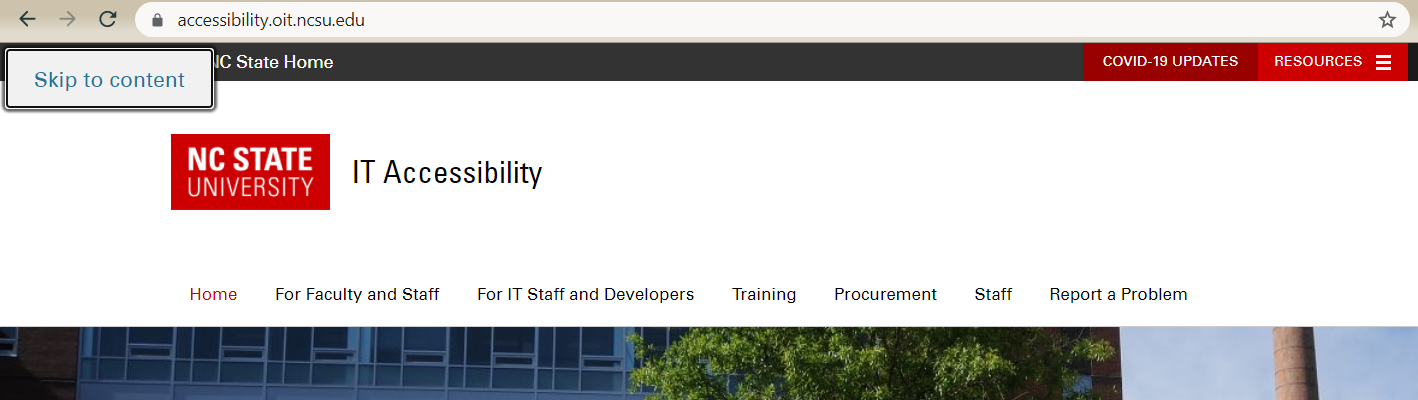
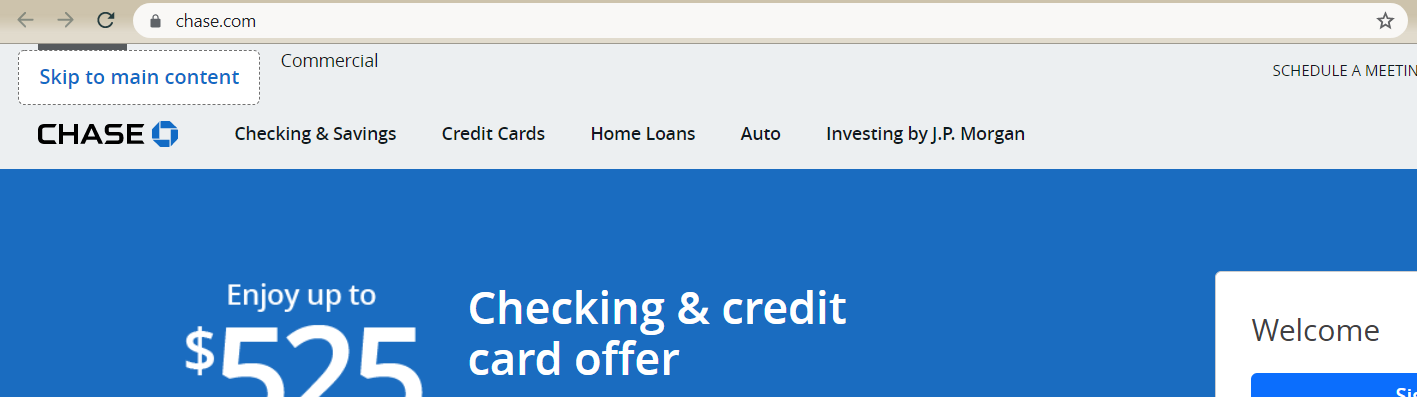
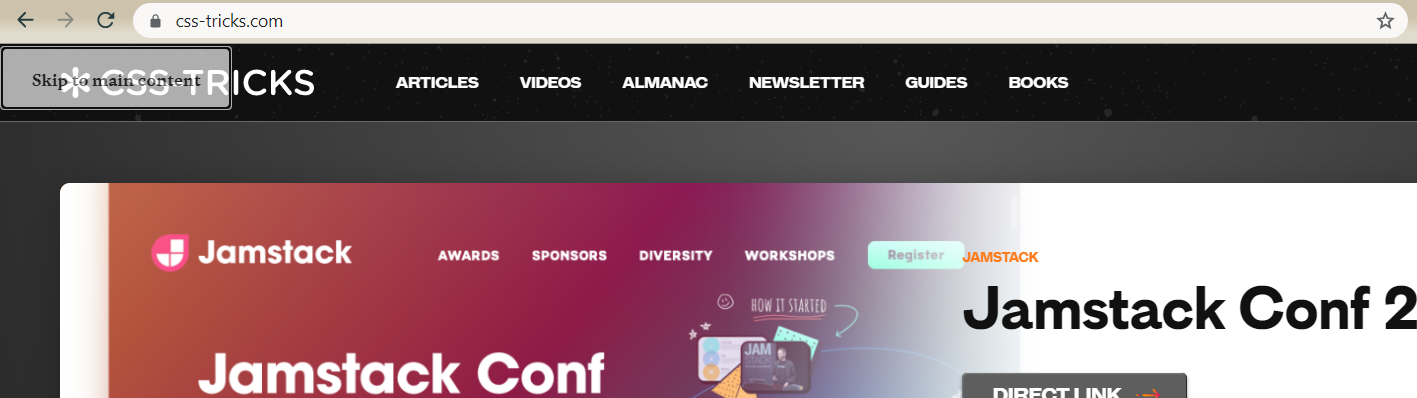
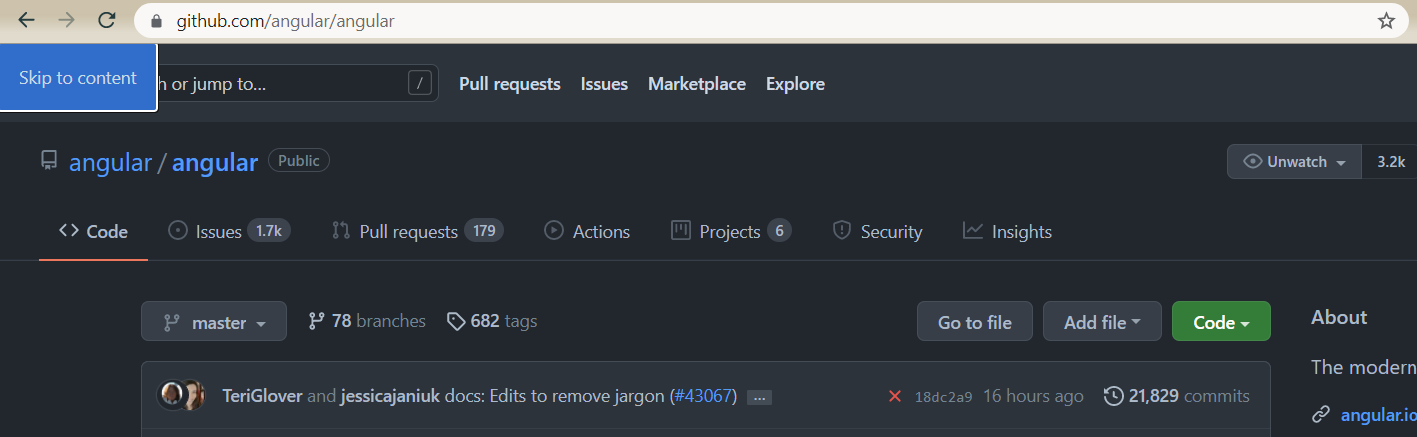
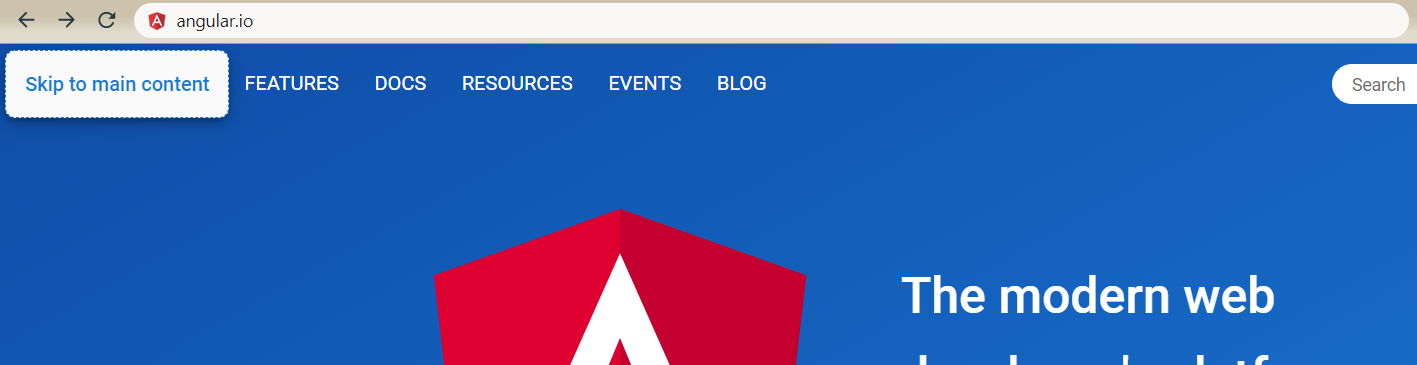
This will also be useful for implementing a "skip to content" link as
described in #42936.
PR Close#43460
When using `ScrollService#scrollToElement()` to scroll to a specific
element, also focus the element if it is focusable (i.e. if it has a
`focus()` method).
This will be useful for implementing a "skip to content" link as
described in #42936.
PR Close#43460
Improve the accessibility of contributor cards (in `/about`) by making
them easier to navigate via keyboard:
- Show the (otherwise hidden) contributor info links on focus.
- Make the "View bio" link focusable via keyboard (to give a clearer
indication that users can click to view the bio - although technically
the click is handled by an ancestor).
- Make the flipped cards focusable via keyboard (so it is possible to
click them to unflip).
PR Close#43460
Improve the accessibility of button groups (such as those seen in
`/about` and `/resources` to choose between the different categories)
by making them easier to navigate via keyboard:
- Make the individual buttons focusable via keyboard.
(Previously, they were not focusable - despite being anchor elements,
because they were lacking an `href` attribute.)
- Give focused buttons a different style.
PR Close#43460
This bit of code is problematic for several reasons:
1. AngularJS-specific handling should not exist in core router code if it can be avoided.
It's not something that should complicated the code long-term
2. It causes URL flickering (the `replace: /` really does happen and can be observed)
3. The original intent was likely for the URL to not actually change;
since the Router only initially supported 'deferred' navigations, this would _usually_ be the case.
4. It actually causes observers of URL changes more problems in handling changes
because the router is already about to process another navigation request.
Notice that when using `'computed'` restoration logic, we do not reset the URL
because it would cause another location change event and conflict with the new navigation.
5. It only resets the browser URL but does nothing to sync the rest of the internal state of the router.
6. It makes guards which call `router.navigate()` behave _slightly_ differently
than guard which return `UrlTree`. Guards which return `UrlTree` do not reset the
URL, but instead just trigger a new navigation.
7. It resets the entire URL rather than just the portion that the
`UrlHandlingStrategy` is configured to handle. Theoretically, the
Router could be configured to only handle a part of the URL so failed
navigations should not reset parts it is not configured to touch.
Note that this is actually a problem in other places in the router as
well where `resetState` is not called before
`resetUrlToCurrentUrlTree`.
As a nice benefit, when `urlUpdateStrategy` is set to `'eager'`, this
makes #17004 possible.
BREAKING CHANGE:
The router will no longer replace the browser URL when a new navigation
cancels an ongoing navigation. This often causes URL flicker and was
only in place to support some AngularJS hybrid applications. Hybrid
applications which rely on the `navigationId` being present on initial
navigations that were handled by the Angular router should instead
subscribe to `NavigationCancel` events and perform the
`location.replaceState` themselves to add `navigationId` to the Router
state.
In addition, tests which assert `urlChanges` on the `SpyLocation` may
need to be adjusted to account for the `replaceState` which is no longer
triggered.
PR Close#43496
The template type-checker has to emit type constructors for the
directives that are used in a template, where a type constructor's
declaration has to mirror the type parameter constraints as they were
originally declared. Therefore, the compiler analyzes whether a type
parameter constraint can be recreated, e.g. by generating imports for
any type references. Some type references cannot be recreated, in which
case the compiler has to fall back to a strategy where the type
constructor is created inline in the original source file (which comes
with a performance penalty).
There used to be an issue for type references to namespaced declarations.
The compiler is unable to emit such references such that an inline
type constructor should be used as fallback, but this did not happen.
This caused the attempt to emit the type reference to fail, as the
namespaced declaration cannot be located by the reference emitters.
This commit fixes the issue by using a stricter check to determine if a
type parameter requires an inline type constructor. The TypeScript
reflection host's `isStaticallyExported` logic was expanded to work for
any declaration instead of just classes, as e.g. type declarations can
also be referenced in a type parameter constraint.
Closes#43383
PR Close#43511
Fixes that the "Loved by millions" graphic doesn't look correctly on Safari.
Note that this fix is somewhat repetitive, but I couldn't find a better one. These are the other things I tried:
* Setting units on the size of `#angular-logo`.
* Setting the size of `#angular-logo` inside the `style` tag.
* Setting the size with inline styles.
Fixes#43498.
PR Close#43502
Improve the aio contributors page responsiveness regarding the browser's
font-size so that the page looks good regarding on font-size settings
(no cropped or cramped content)
PR Close#43355
The getTransition helper function ensures that urlAfterRedirects is assigned for when
the router does not process the previous or current URL. In this case, we would set
the browserUrlTree to be the urlAfterRedirects, which was initialized to be the browserUrlTree.
This is a no-op, so there's no need for the getTransition function at all.
PR Close#43436
These token interfaces will make it easier to reason about tokens in the
parser and in specs.
Previously, it was never clear what items could appear in the `parts`
array of a token given a particular `TokenType`. Now, each token interface
declares a labelled tuple for the parts, which helps to document the token
better.
PR Close#43132
Previously, the way templates were tokenized meant that we lost information
about the location of interpolations if the template contained encoded HTML
entities. This meant that the mapping back to the source interpolated strings
could be offset incorrectly.
Also, the source-span assigned to an i18n message did not include leading
whitespace. This confused the output source-mappings so that the first text
nodes of the message stopped at the first non-whitespace character.
This commit makes use of the previous refactorings, where more fine grain
information was provided in text tokens, to enable the parser to identify
the location of the interpolations in the original source more accurately.
Fixes#41034
PR Close#43132
The tests were checking that the source-span of parsed HTML nodes were
accurate, but they were not checking the span when it includes the
"leading trivia", which are given by the `fullStart` rather than `start`
location.
PR Close#43132
When it was tokenized, text content is split into parts that can include
interpolations and encoded entities tokens.
To make this information available to downstream processing, this commit
adds these tokens to the `Text` AST nodes, with suitable processing.
PR Close#43132
The lexer now splits encoded entity tokens out from text and attribute value tokens.
Previously encoded entities would be decoded and the decoded value would be
included as part of the text token of the surrounding text. Now the entities
have their own tokens. There are two scenarios: text and attribute values.
Previously the contents of `<div>Hello & goodbye</div>` would be a single
TEXT token. Now it will be three tokens:
```
TEXT: "Hello "
ENCODED_ENTITY: "&", "&"
TEXT: " goodbye"
```
Previously the attribute value in `<div title="Hello & goodbye">` would be
a single text token. Now it will be three tokens:
```
ATTR_VALUE_TEXT: "Hello "
ENCODED_ENTITY: "&", "&"
ATTR_VALUE_TEXT: " goodbye"
```
- ENCODED_ENTITY tokens have two parts: "decoded" and "encoded".
- ENCODED_ENTITY tokens are always preceded and followed by either TEXT tokens
or ATTR_VALUE_TEXT tokens, depending upon the context, even if they represent
an empty string.
The HTML parser has been modified to recombine these tokens to allow this
refactoring to have limited effect in this commit. Further refactorings
to use these new tokens will follow in subsequent commits.
PR Close#43132
The lexer now splits interpolation tokens out from text tokens.
Previously the contents of `<div>Hello, {{ name}}<div>` would be a single
text token. Now it will be three tokens:
```
TEXT: "Hello, "
INTERPOLATION: "{{", " name", "}}"
TEXT: ""
```
- INTERPOLATION tokens have three parts, "start marker", "expression"
and "end marker".
- INTERPOLATION tokens are always preceded and followed by TEXT tokens,
even if they represent an empty string.
The HTML parser has been modified to recombine these tokens to allow this
refactoring to have limited effect in this commit. Further refactorings
to use these new tokens will follow in subsequent commits.
PR Close#43132
Previously, the regular expression used by the compiler's ShadowDOM CSS
shim to strip comments from CSS text was susceptible to [catastrophic
backtracking][1], which could lead to exponential (O(2^n)) increase in
complexity/execution time. More specifically, this would be triggered if
the processed text contained an unterminated comment with lots of
leading whitespace (i.e. `/*`, followed by lots of whitespace characters
and no closing `*/`).
Although such input is unlikely in real-world scenarios, this commit
improves the regular expression to not be susceptible to this issue.
[1]: https://www.regular-expressions.info/catastrophic.html
PR Close#43456
Previously the `http` example did accessed the npmsearch.com website to demonstrate response caching.
But if this service became unavailable then the example (and its e2e tests) would fail.
This commit changes the example to use the in-memory-web-api for this lookup, which will not be affected by 3rd party outages.
The guide that references this example has been updated to avoid references to the original npm search service.
PR Close#43475